
Snoqualmie, WA sits at the base of the Cascade foothills, where neighborhood streets quickly give way to dense second-growth forest. Homes here include newer communities near Snoqualmie Ridge as well as older properties around Railroad Avenue and the historic downtown area, many with mature Douglas fir, western red cedar, and bigleaf maple growing close to homes and outbuildings. The tree care professionals in Redmond serving this area know how to evaluate canopy risk on slopes, handle root pressure near aging foundations, and clear storm-damaged limbs from properties exposed to Cascade weather throughout the year.
That is why more property owners in Snoqualmie, WA are choosing Arbor Tree Care to help keep their landscapes in good shape all year long.

Prefer to Talk to An Expert?
(425) 381-4553
Why Snoqualmie Property Owners Rely on Local Professionals
Crews familiar with this area understand the dense native canopy, moisture-heavy soils, and steep grading that shape many Snoqualmie properties. They match each job to the site, using methods and equipment suited to fungal pressure, wind-throw risk, and the limited access that is common in this part of the greater Redmond service area.
From professional tree pruning solutions along Snoqualmie Ridge Drive, where tall firs can crowd rooflines, to reliable stump removal services on tight lots near the Snoqualmie Valley Trail corridor, every project is completed with care and long-term property health in mind.
If you care about your property, local contractors can help keep your canopy healthy, your yard easier to use, and your space safer in Snoqualmie.
Our Tree-Service Services
in Redmond, WA, Include
Tree Services Built Around Snoqualmie Neighborhoods
Forested lots and limited access make one-size-fits-all tree work a poor fit here. That is why local professionals bring site-specific solutions to every steep, wooded, or moisture-prone property.
Whether the property is a newer single-family home in Snoqualmie Ridge, a rural parcel in the foothills near North Bend, or a historic home close to the Snoqualmie Falls overlook, the approach stays tailored to the site.
From tree trimming and tree disease treatments to root protection and emergency tree services, services are shaped around the neighborhood and the needs of each property.
Snoqualmie’s Forest History Still Shapes Today’s Tree Care
Snoqualmie grew as a logging and railroad community in the late 1800s. As the city expanded with planned neighborhoods along the Ridge, its identity stayed closely tied to old-growth and second-growth forest. That history still shows up today in mature specimens, soil conditions affected by roots, and the damp understory that influences how tree services need to be performed.
Fungal Disease and Canopy Decline in High-Moisture Conditions
Many Snoqualmie properties, especially older neighborhoods near downtown and the valley floor along the Snoqualmie River corridor, deal with ongoing fungal pressure because of frequent rainfall and restricted airflow through the canopy. Over time, this can weaken Douglas fir and cedar trees, increase decay, and create safety concerns near structures while reducing long-term canopy health.
Local professionals address these issues with targeted tree disease treatments, selective crown thinning to improve circulation, and removal of damaged limbs to help reduce structural failure and access problems.
Overgrown Native Trees on Sloped Residential Lots
Mature Douglas fir, red alder, and bigleaf maple trees bring beauty and character to the neighborhood, but they can also create problems when branches reach rooflines or roots push toward driveways and retaining walls. If left alone, this growth can lead to damage and expensive repairs.
Pros manage these conditions with directional pruning, controlled crown reduction, and root barrier installation, all adjusted for slope and structure proximity across Snoqualmie Ridge and the valley neighborhoods.
Aging Tree Specimens Near Historic Infrastructure
Years of unmanaged growth have left many trees near the historic downtown corridor and Railroad Avenue with weakened structure and limited natural support.
Trusted crews address these areas with careful hazard inspections, selective limb removal, and tree fertilizing programs that support healthier canopy growth and lower the chance of sudden branch failure near people and vehicles.
Storm Damage from Cascade Wind and Snow Events
Fall and winter weather in the Cascades can bring strong winds and wet snow that break limbs, uproot shallow-rooted trees, and leave debris across driveways and access roads.
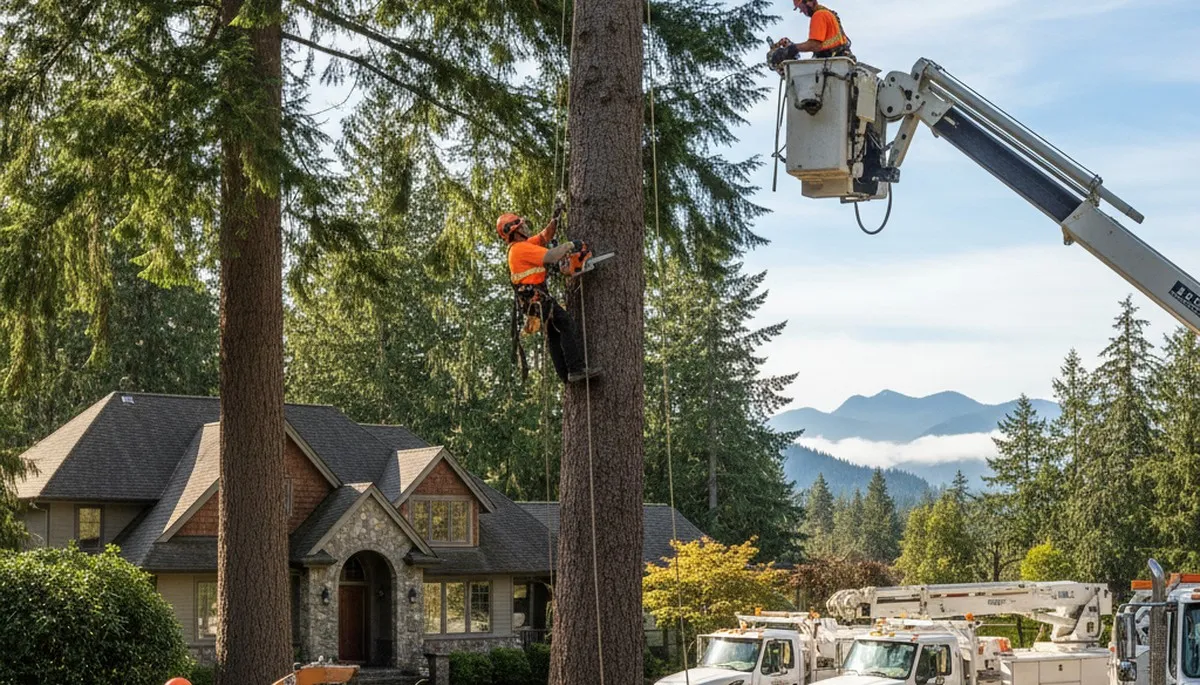
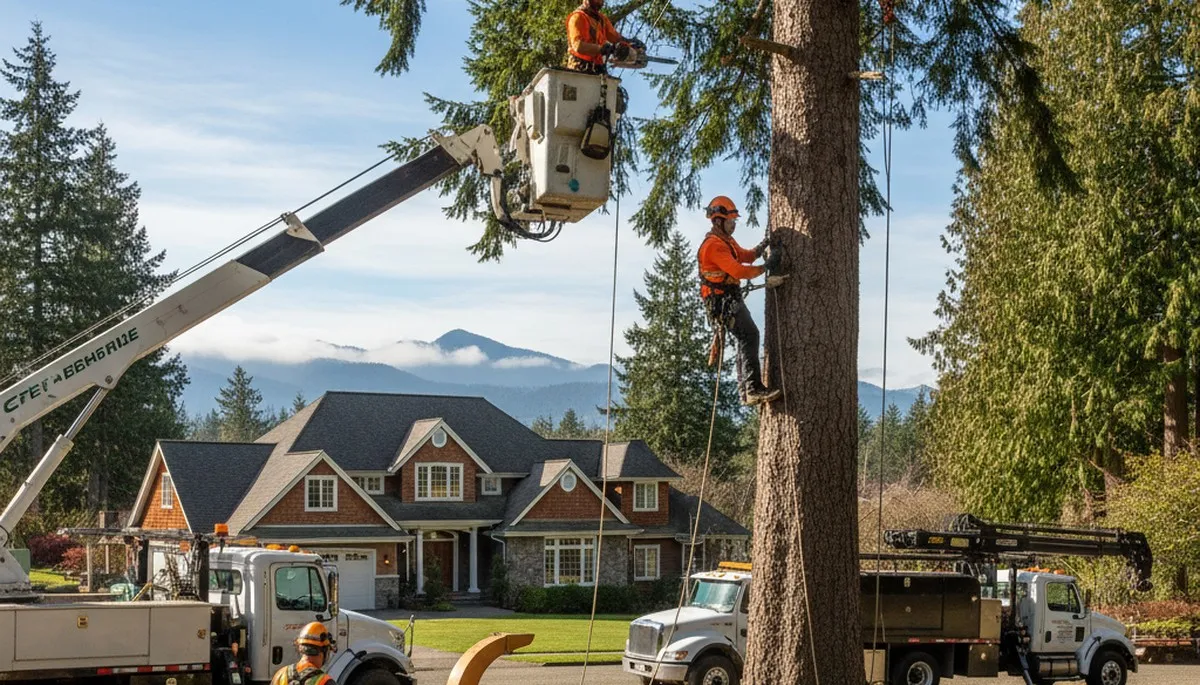
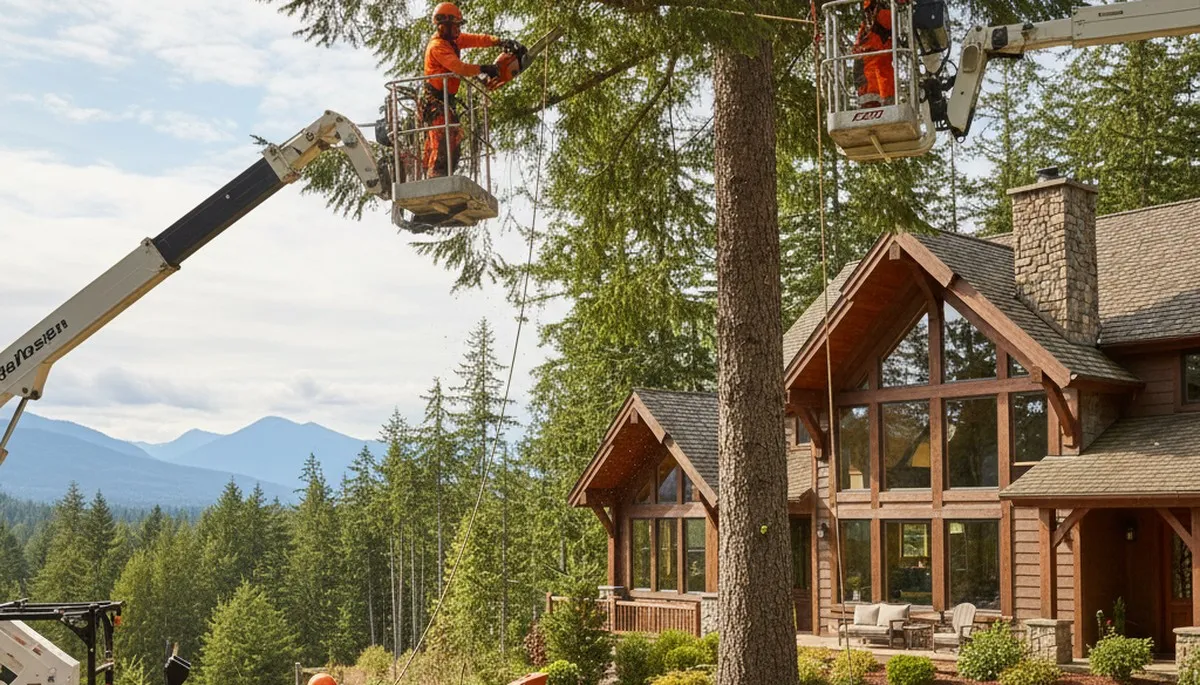
Experienced crews respond quickly with storm damage services that use aerial lift equipment, climbing methods, and coordinated cleanup to restore access in the wet, heavy conditions common during Snoqualmie storm season.
Tight Equipment Access on Forested and Sloped Lots
Steep grades, narrow driveways, and thick understory growth are common in Snoqualmie, which can make large equipment difficult to use for trimming and removal work.
Local professionals rely on compact aerial lifts and hand-carry rigging systems to protect the property and complete precise canopy work, even on sites with difficult access.
For ideas on maintaining your Snoqualmie property throughout the year, request a free quote from a local professional in Snoqualmie by calling (425) 381-4553. Safe access matters on every property. Let Arbor Tree Care help you protect it.
Kick off your tree service project today!

Tree Services in Snoqualmie, WA for Every Season
From regular maintenance to urgent storm response, local crews help keep properties healthy, accessible, and structurally sound:
Routine Tree Trimming and Pruning in Snoqualmie, WA
- Crown thinning for Douglas fir near Snoqualmie Ridge Drive: Opening up dense interior growth improves airflow and helps lower fungal pressure in the heavy canopy conditions found along the Ridge.
- Structural pruning for young trees in new developments: Newly planted trees in Snoqualmie Ridge subdivisions benefit from early structural tree pruning to build strong branch form before issues develop.
- Clearance trimming near rooflines and utility corridors: Homes around Railroad Avenue and the historic downtown area often need careful limb clearance to maintain safe spacing from structures and overhead lines.
- Seasonal pruning for bigleaf maple and red alder: These fast-growing native trees need regular attention to limit excess weight and reduce the chance of limb breakage, especially on valley floor properties near the Snoqualmie River.
- Vista and view pruning on hillside lots: Homes with Cascade Mountain views benefit from selective tree trimming that protects sightlines without sacrificing tree health or slope stability. Similar canopy management is also provided for tree trimming services in Issaquah, WA, where hillside terrain and native species create comparable needs.
Plan seasonal trimming before Cascade storm season arrives to help reduce hazards on your Snoqualmie property.
Tree Removal Services in Snoqualmie, WA
- Hazardous tree removal near homes and outbuildings: Leaning or damaged Douglas fir and cedar trees close to structures call for sectional removal to protect roofs, fences, and surrounding landscaping.
- Storm-damaged tree removal after wind and snow events: Cascade weather often leaves uprooted or broken trees across Snoqualmie properties, making prompt tree removal important for restoring access and preventing more damage.
- Dead tree removal to reduce pest and disease spread: In Snoqualmie’s damp climate, standing dead trees can quickly attract wood-boring insects and fungal pathogens that may affect nearby healthy trees.
- Selective removal in densely wooded lots: Many forested properties along the valley corridor need selective removal to open the canopy, reduce competition, and improve the condition of the trees that remain.
- Removal of invasive species near natural areas: Non-native trees near natural buffers and trail corridors should be removed to help protect native ecosystems.
Removing hazardous or dead trees in a timely way helps reduce liability and preserves the canopy that defines Snoqualmie’s neighborhoods.
Stump Grinding and Cleanup in Snoqualmie, WA
- Stump grinding on sloped lots: Stumps left on graded residential land can become tripping hazards and get in the way of mowing and other yard maintenance, so grinding is often needed on uneven terrain.
- Root system cleanup after large tree removal: After mature fir or cedar removal, leftover roots and debris should be cleared so the site can be prepared for replanting or landscape design improvements.
- Stump removal near driveways and retaining walls: Stumps close to hardscape features require careful grinding to avoid affecting drainage or weakening nearby structures.
- Post-removal debris hauling and site restoration: Thorough cleanup after stump work helps properties near Snoqualmie Ridge common areas and residential streets stay aligned with neighborhood maintenance expectations.
- Multiple stump removal on acreage lots: Larger foothill properties in the Snoqualmie Valley often have several old stumps from earlier clearing, and handling them in one visit can reduce disruption and improve efficiency. Similar multi-stump work is often completed for tree removal contractors in Duvall, WA, where rural lot conditions are similarly common.
Removing stumps opens usable yard space, reduces pest habitat, and prepares the ground for new planting or turf recovery across Snoqualmie properties.
Emergency Tree Services in Snoqualmie, WA
- 24-hour response for storm-fallen trees blocking driveways and roads: Strong Cascade winds can bring down large fir and alder trees across access points, making immediate emergency tree services important for safe entry and exit.
- Emergency limb removal after wet snow loading: Heavy, wet snow common at Snoqualmie elevations can snap limbs without warning, creating urgent hazards over walkways and structures.
- Rapid response for trees leaning toward structures after soil saturation: Prolonged rain can saturate the soil and destabilize shallow-rooted trees, which may require emergency assessment and removal before they strike a building.
- Post-storm debris clearing from yards and access routes: After major weather events, organized debris removal helps properties return to normal use more quickly.
- Emergency insect management response for sudden pest outbreak: Bark beetles and wood borers can spread quickly in storm-stressed trees, so fast treatment may help limit damage to nearby healthy specimens.
Because Snoqualmie sits close to the Cascades, severe weather can develop quickly. Having a local emergency contact ready before the next storm helps protect your property and your access.